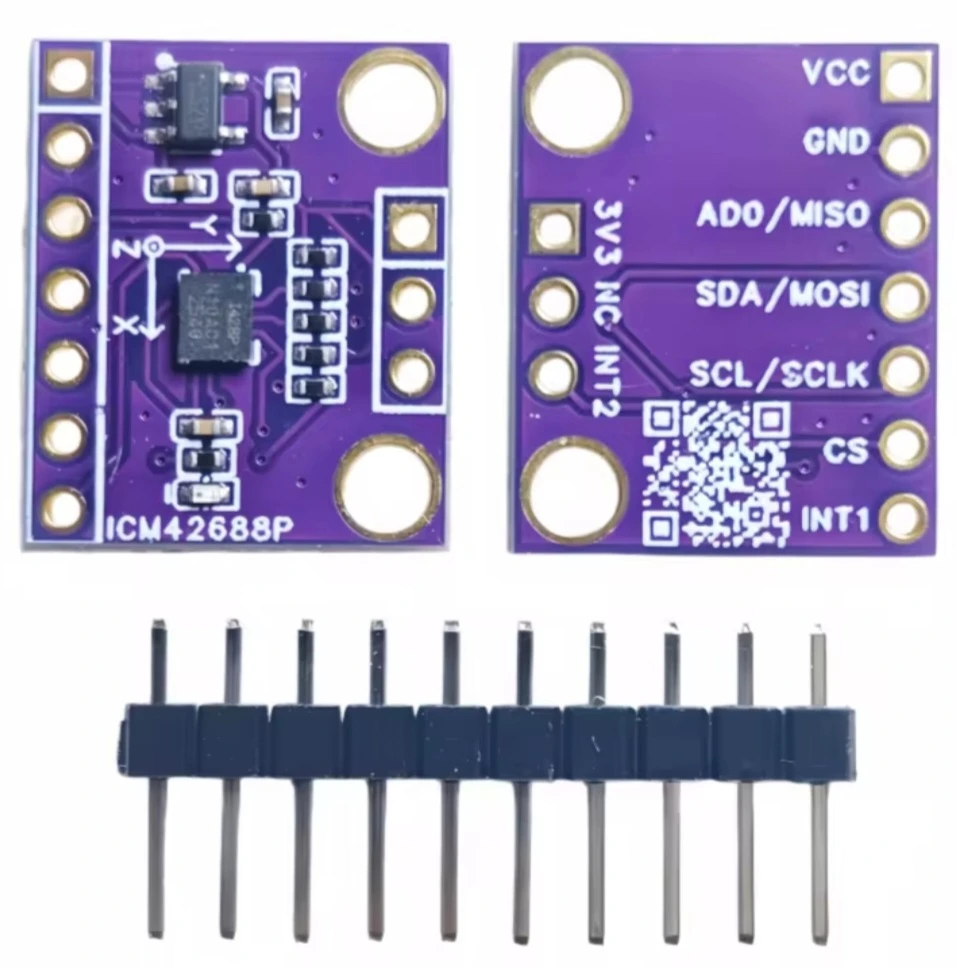
ICM-42688-P 6-Axis High-Precision IMU
TDK InvenSense
The ICM-42688-P is a high-precision 6-axis inertial measurement unit from TDK InvenSense combining a low-noise 3-axis accelerometer and gyroscope with I²C, I3C and SPI interfaces, FIFO storage, APEX motion features and an external clock input.
Specifications
| Sensor Type | 6-axis high-precision inertial measurement unit |
|---|---|
| Accelerometer | 3-axis, ±2g / ±4g / ±8g / ±16g |
| Gyroscope | 3-axis, ±15.6 / ±31.2 / ±62.5 / ±125 / ±250 / ±500 / ±1000 / ±2000 dps |
| Gyroscope Noise | 2.8 mdps/√Hz |
| Accelerometer Noise | 70 µg/√Hz |
| Interfaces | I²C, I3C, SPI |
| I²C Speed | Up to 1 MHz |
| I3C Speed | Up to 12.5 MHz |
| SPI Speed | Up to 24 MHz |
| FIFO | 2 KB |
| Supply Voltage | 1.71 V to 3.6 V |
| Low-Noise 6-Axis Current | 0.88 mA |
| Operating Temperature | -40°C to +85°C |
| Package | 14-pin LGA, 2.5 × 3.0 × 0.91 mm |
Some links on this page are affiliate links. If you purchase through them, Embedded Nerd may earn a small commission at no additional cost to you. This helps support the website and allows us to continue creating free tutorials and guides. Thank you for your support!
Resources
You May Also Like
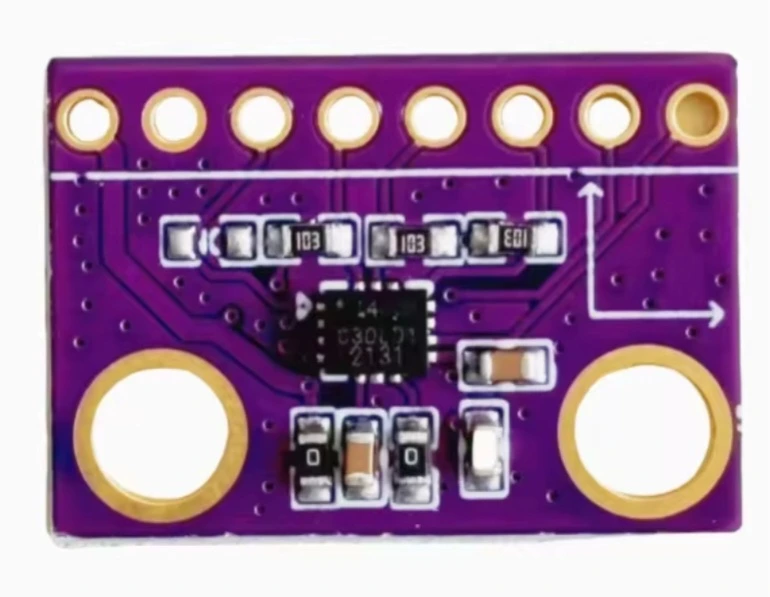
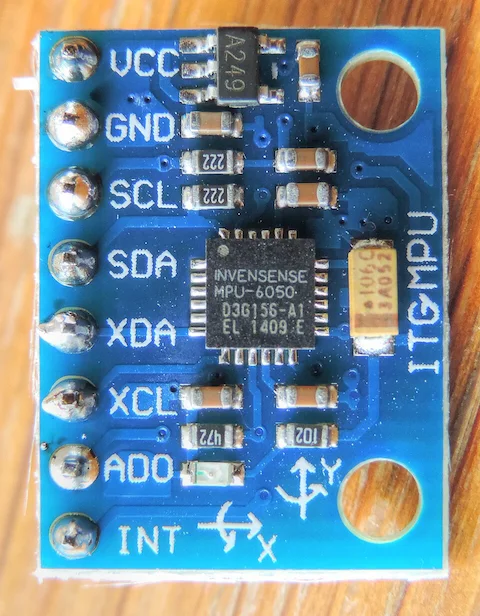
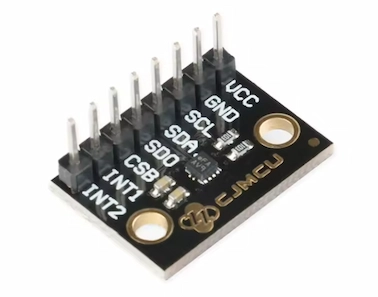

The ICM-42688-P is a high-precision 6-axis IMU from TDK InvenSense that combines a low-noise 3-axis accelerometer and 3-axis gyroscope in a compact package.
It is designed for applications where measurement noise and motion accuracy are more important than achieving the absolute lowest power consumption.
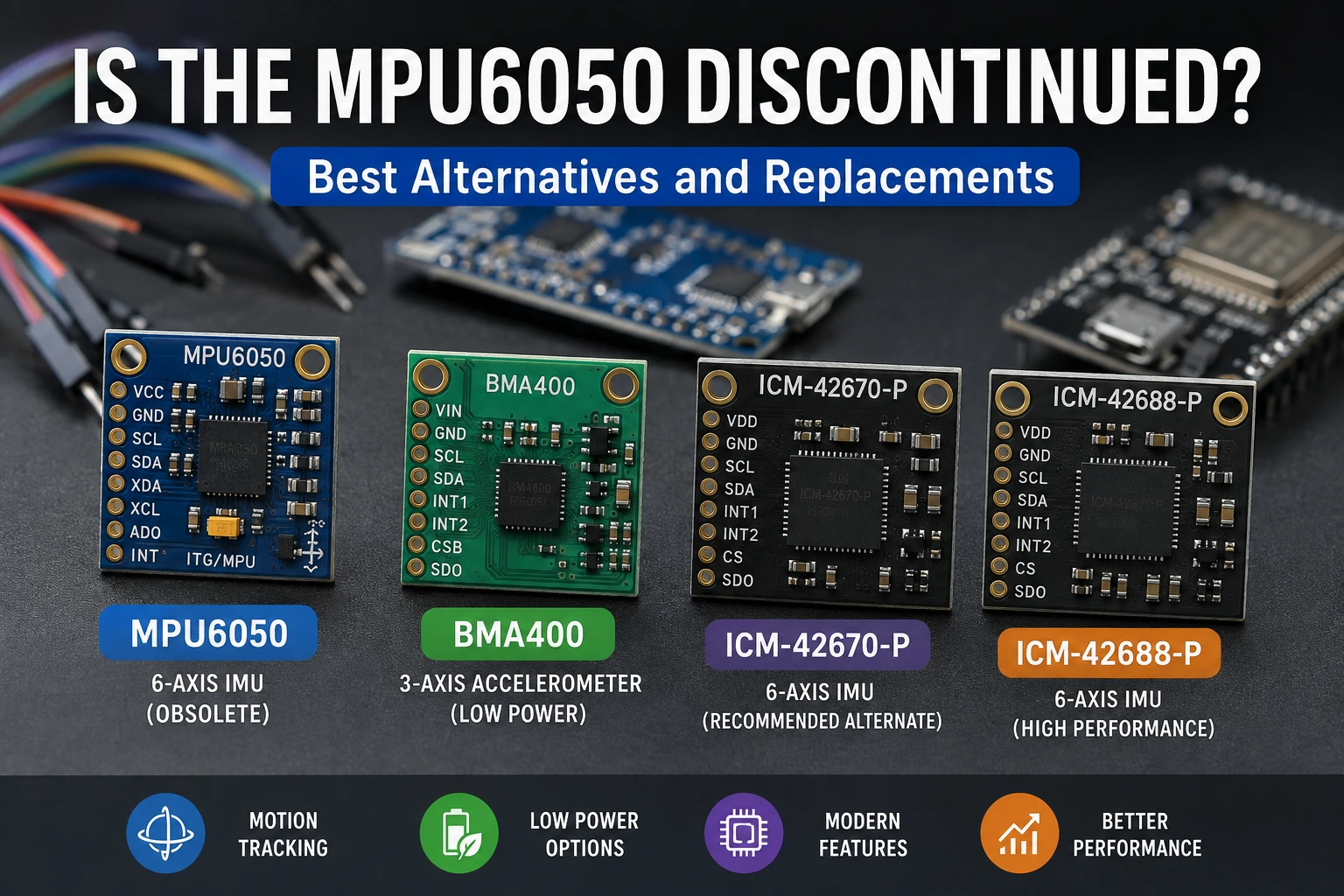
If you are evaluating modern replacements for the legacy MPU6050, see our MPU6050 discontinued and alternatives guide.
Key Features
- 3-axis low-noise accelerometer
- 3-axis low-noise gyroscope
- Accelerometer ranges of ±2g, ±4g, ±8g and ±16g
- Gyroscope ranges from ±15.6 to ±2000 dps
- I²C, I3C and SPI digital interfaces
- Up to 1 MHz I²C
- Up to 12.5 MHz I3C
- Up to 24 MHz SPI
- 2 KB FIFO
- 2.8 mdps/√Hz gyroscope noise
- 70 µg/√Hz accelerometer noise
- APEX motion-processing features
- External clock input
- 1.71 V to 3.6 V supply
- -40°C to +85°C operating temperature
- Compact 14-pin LGA package
Applications
The ICM-42688-P is intended for demanding motion-sensing applications such as:
- Robotics
- AR/VR/XR
- High-performance IoT
- Precision motion tracking
- Stabilization
- Navigation-related motion sensing
- Industrial and embedded motion systems
- Portable electronics
Accelerometer and Gyroscope
Accelerometer
The 3-axis accelerometer supports four full-scale ranges:
| Range | Maximum acceleration |
|---|---|
| ±2g | 2g |
| ±4g | 4g |
| ±8g | 8g |
| ±16g | 16g |
Gyroscope
The ICM-42688-P provides a wider selection of gyroscope ranges than the ICM-42670-P:
| Range | Maximum angular rate |
|---|---|
| ±15.6 dps | 15.6 degrees/s |
| ±31.2 dps | 31.2 degrees/s |
| ±62.5 dps | 62.5 degrees/s |
| ±125 dps | 125 degrees/s |
| ±250 dps | 250 degrees/s |
| ±500 dps | 500 degrees/s |
| ±1000 dps | 1000 degrees/s |
| ±2000 dps | 2000 degrees/s |
The lower gyroscope ranges are useful when the application prioritizes fine rotational measurement.
Low-Noise Measurement
One of the main reasons to choose the ICM-42688-P is its low sensor noise.
TDK specifies:
- Gyroscope noise: 2.8 mdps/√Hz
- Accelerometer noise: 70 µg/√Hz
The low noise performance makes the device suitable for applications where small changes in motion need to be measured reliably.
This is one of the main distinctions between the ICM-42688-P and lower-power alternatives such as the ICM-42670-P.
High-Resolution FIFO Data
The ICM-42688-P includes a FIFO designed to buffer sensor data and reduce the need for continuous host processing.
TDK also provides high-resolution FIFO data formats, including 19-bit gyroscope and 18-bit accelerometer data, allowing applications to retain more measurement information when the appropriate configuration is used.
This can be useful in high-precision motion-processing systems where preserving sensor resolution is important.
External Clock Input
The ICM-42688-P supports an external clock input.
An external clock can be useful in applications where the sensor timing needs to be synchronized with another part of the system.
This is particularly relevant in multi-sensor systems and precision motion applications.
Digital Interfaces
The ICM-42688-P supports I²C, I3C and SPI.
| Interface | Maximum speed |
|---|---|
| I²C | 1 MHz |
| I3C | 12.5 MHz |
| SPI | 24 MHz |
For an I²C implementation, bus pull-up selection depends on voltage, speed and capacitance. The I²C Pull-up Resistor Calculator can help estimate suitable resistor values.
SPI is useful when higher throughput or deterministic communication is preferred, while I3C provides a modern high-speed interface for compatible systems.
APEX Motion Features
The ICM-42688-P includes TDK InvenSense APEX motion-processing features.
Depending on configuration, these include:
- Pedometer
- Tilt detection
- Tap detection
- Wake-on-motion
- Raise-to-wake / sleep functions
- Significant motion detection
These functions can reduce the amount of raw motion processing required on the host processor.
Power Consumption
The ICM-42688-P is optimized for low-noise, high-performance operation.
TDK specifies approximately 0.88 mA for low-noise 6-axis operation.
This is higher than the ICM-42670-P, reflecting its focus on higher precision and lower sensor noise.
For applications where battery life is the dominant constraint, the ICM-42670-P may be a better fit.
Supply Voltage
The ICM-42688-P operates from:
1.71 V to 3.6 V
Always check the breakout board implementation because the board may include its own regulator or level shifting.
The sensor is well suited to 3.3 V embedded systems such as the ESP32 DevKit V1.
Package and Size
The ICM-42688-P uses a compact 14-pin LGA package measuring approximately:
2.5 × 3.0 × 0.91 mm
The small package makes it suitable for compact embedded products where PCB space is limited.
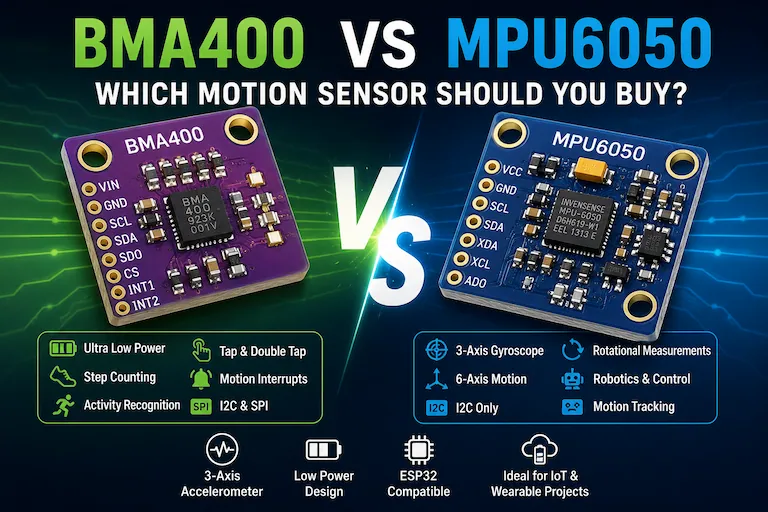
ICM-42688-P vs MPU6050
The ICM-42688-P is a modern high-precision alternative to the legacy MPU6050.
| Feature | ICM-42688-P | MPU6050 |
|---|---|---|
| Axes | 6-axis | 6-axis |
| Accelerometer | ±2/4/8/16g | ±2/4/8/16g |
| Gyroscope | ±15.6 to ±2000 dps | ±250 to ±2000 dps |
| Interfaces | I²C / I3C / SPI | I²C / SPI |
| Sensor noise | Much lower | Higher |
| Supply | 1.71–3.6 V | 2.375–3.46 V |
| Operating temperature | -40°C to +85°C | -40°C to +85°C |
| Package | 2.5 × 3.0 × 0.91 mm | 4 × 4 × 0.9 mm |
The ICM-42688-P is not a drop-in replacement. Hardware, register maps, initialization and software libraries are different.
Our MPU6050 discontinued and alternatives guide explains the main differences and alternative options in more detail.
ICM-42688-P vs ICM-42670-P
The two devices share the same general architecture and digital interfaces, but they have different priorities.
| Feature | ICM-42688-P | ICM-42670-P |
|---|---|---|
| Positioning | High precision | Low power |
| Gyroscope noise | 2.8 mdps/√Hz | Higher |
| Accelerometer noise | 70 µg/√Hz | Higher |
| Low-noise 6-axis current | 0.88 mA | 0.55 mA |
| Gyro ranges | ±15.6 to ±2000 dps | ±250 to ±2000 dps |
| Package thickness | 0.91 mm | 0.76 mm |
Choose the ICM-42688-P when low noise and precision are priorities. Choose the ICM-42670-P when low power, compact size and cost are more important.
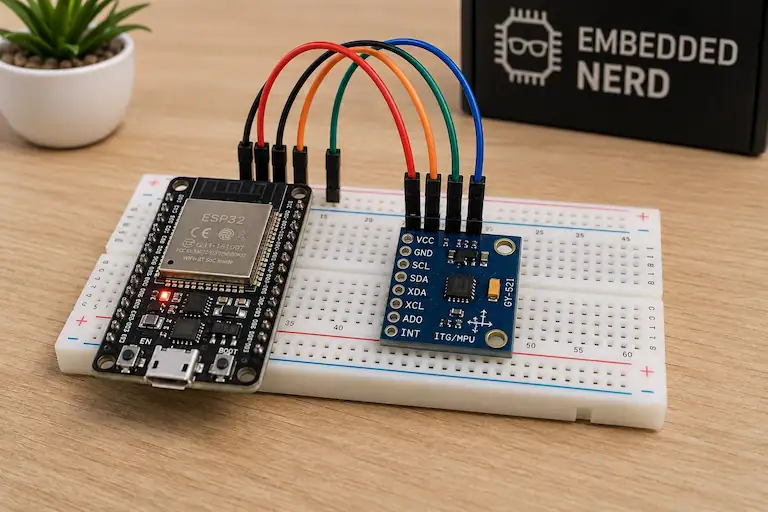
Using the ICM-42688-P with ESP32
The ICM-42688-P can be integrated into ESP32 projects using I²C or SPI.
A typical development setup includes:
- ESP32 development board
- ICM-42688-P breakout board
- 3.3 V supply
- I²C or SPI connections
The ESP32 DevKit V1 is a practical development platform for testing motion sensors and building prototypes.
When using I²C, make sure the pull-up configuration is appropriate for the selected bus speed and capacitance.
Calibration
High-precision motion applications often benefit from careful calibration.
At minimum, measure stationary accelerometer and gyroscope bias before using the sensor for orientation or motion calculations. More demanding applications may also require scale-factor, alignment and temperature compensation.
The Embedded Nerd MPU6050 Calibration Guide explains the general concepts behind stationary sampling, offset calculation and verification. Although it is written for the MPU6050, the calibration principles are useful when understanding IMU bias.
Technical Specifications
| Specification | ICM-42688-P |
|---|---|
| Sensor type | 6-axis high-precision IMU |
| Accelerometer | 3-axis |
| Accelerometer range | ±2 / ±4 / ±8 / ±16g |
| Accelerometer noise | 70 µg/√Hz |
| Gyroscope | 3-axis |
| Gyroscope range | ±15.6 / ±31.2 / ±62.5 / ±125 / ±250 / ±500 / ±1000 / ±2000 dps |
| Gyroscope noise | 2.8 mdps/√Hz |
| Interfaces | I²C / I3C / SPI |
| I²C speed | Up to 1 MHz |
| I3C speed | Up to 12.5 MHz |
| SPI speed | Up to 24 MHz |
| FIFO | 2 KB |
| Supply voltage | 1.71–3.6 V |
| Low-noise 6-axis current | 0.88 mA |
| Operating temperature | -40°C to +85°C |
| Package | 14-pin LGA |
| Package size | 2.5 × 3.0 × 0.91 mm |
Frequently Asked Questions
Is the ICM-42688-P a replacement for the MPU6050?
It is a modern alternative, but it is not a drop-in replacement. The package, pinout, register map and software interface are different.
Is the ICM-42688-P better than the MPU6050?
For applications requiring lower motion-sensor noise and higher precision, it is a substantially more capable modern device. The MPU6050 can still be adequate for simple legacy projects.
Does the ICM-42688-P support I²C?
Yes. It supports I²C, I3C and SPI.
Can the ICM-42688-P be used with an ESP32?
Yes. It can communicate with an ESP32 using I²C or SPI, subject to the electrical requirements of the sensor and breakout board.
What is the difference between ICM-42688-P and ICM-42670-P?
The ICM-42688-P prioritizes precision and low sensor noise. The ICM-42670-P prioritizes lower power consumption and compact embedded applications.
Does the ICM-42688-P need calibration?
For demanding motion applications, calibration is recommended. At minimum, stationary bias should be characterized. Higher-accuracy systems may require more comprehensive calibration.
Conclusion
The ICM-42688-P is a high-precision 6-axis IMU designed for applications where low sensor noise and accurate motion measurement are important.
Its low-noise accelerometer and gyroscope, wide gyroscope range selection, high-resolution FIFO features, APEX motion functions and multiple digital interfaces make it a strong choice for robotics, AR/VR/XR, IoT and demanding embedded motion applications.
For lower-power designs, compare it with the ICM-42670-P. For projects replacing an MPU6050, the MPU6050 alternatives guide provides a broader comparison.