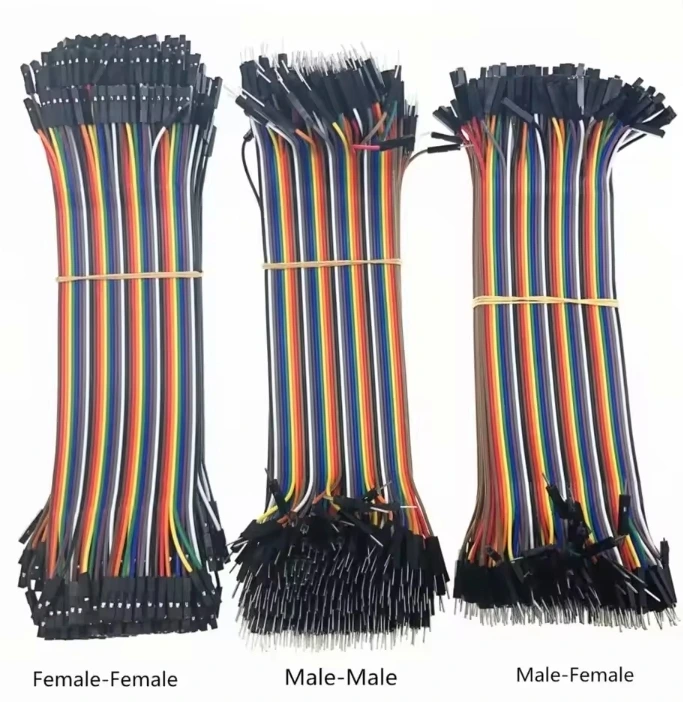
Jumper Wires
Reusable jumper wires with 2.54 mm connectors for solderless breadboards, electronic prototyping and embedded system development.
Specifications
| Connector Pitch | 2.54 mm |
|---|---|
| Wire Type | Dupont Jumper Wire |
| Available Types | Male-to-Male, Male-to-Female, Female-to-Female |
| Typical Length | 10–30 cm |
| Conductor | Stranded Copper |
| Insulation | PVC |
| Reusable | true |
| Compatible With | Breadboards and 2.54 mm Headers |
Some links on this page are affiliate links. If you purchase through them, Embedded Nerd may earn a small commission at no additional cost to you. This helps support the website and allows us to continue creating free tutorials and guides. Thank you for your support!
Resources
You May Also Like

Overview
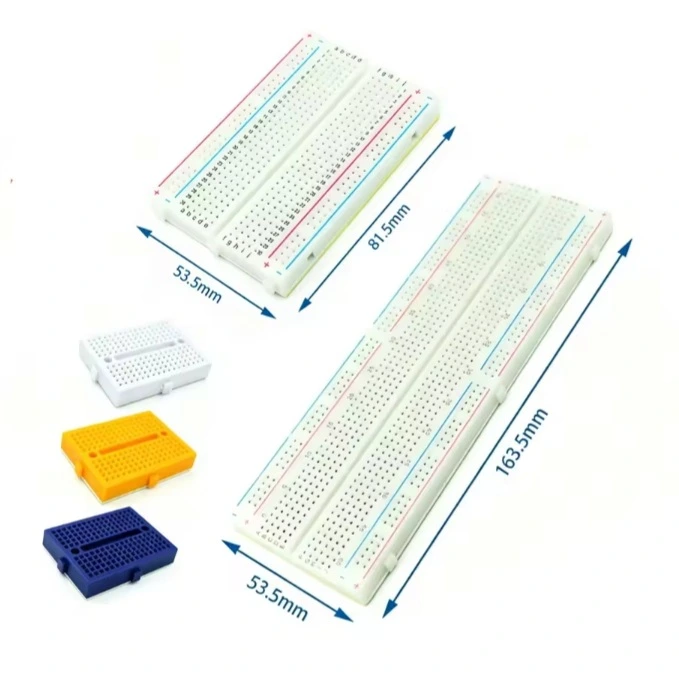
Jumper wires, also known as Dupont wires, are one of the most essential accessories for electronic prototyping. They provide quick and reliable connections between components without soldering, making them ideal for use with a Solderless Breadboard.
They are widely used with development boards such as the ESP32 DevKit, Arduino and Raspberry Pi, allowing sensors, displays and other modules to be connected in seconds.
Features
- Flexible stranded copper wire
- Standard 2.54 mm connectors
- Reusable
- Available in multiple colours
- Suitable for breadboards
- Perfect for rapid prototyping
- Compatible with Arduino and ESP32
- Available in three connector combinations
Types of Jumper Wires
Jumper wires are available in three common configurations:
Male-to-Male
The most common type, used to connect breadboards and development boards together.
Male-to-Female
Ideal for connecting pin headers on development boards to modules with female connectors.
Female-to-Female
Used when connecting two male header pins directly.
Each type serves a different purpose, and many starter kits include all three.
Applications
Jumper wires are commonly used for:
- Breadboard circuits
- ESP32 projects
- Arduino prototypes
- Raspberry Pi GPIO connections
- Sensor testing
- OLED displays
- Robotics
- IoT development
- Educational electronics
Compatible Components
Jumper wires are compatible with virtually all standard 2.54 mm electronic modules, including:
- Solderless Breadboard
- ESP32 DevKit
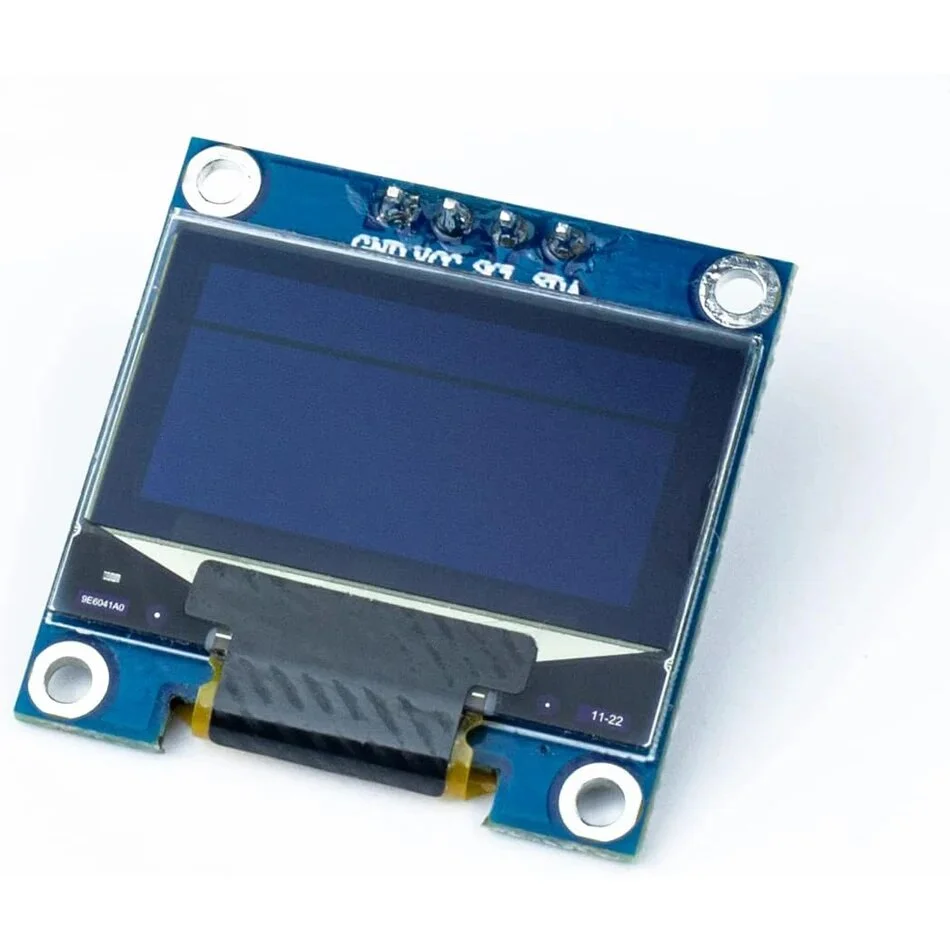
- SSD1306 OLED Display
- MPU6050
- LEDs
- Push Buttons
- Resistors
- Relay Modules
Best Practices
For reliable connections:
- Use different wire colours for power and signals.
- Keep wires as short as practical.
- Avoid excessive bending.
- Replace damaged jumper wires.
- Keep wiring organised when debugging.
Project Ideas
Jumper wires are used in almost every embedded electronics project, including:
- OLED display projects
- IoT sensor nodes
- Weather stations
- Home automation
- Robotics
- Environmental monitoring
- Data logging
- Smart devices
Compatibility
Jumper wires work with virtually every popular embedded platform, including:
- Arduino Uno
- Arduino Nano
- ESP32 DevKit
- ESP8266
- Raspberry Pi
- STM32
- RP2040
- Teensy
Their standard 2.54 mm connector spacing makes them universally compatible with most development boards and modules.
Frequently Asked Questions
What are jumper wires?
Jumper wires are reusable electrical wires fitted with Dupont connectors that allow components to be connected without soldering.
What is the difference between male and female jumper wires?
Male jumper wires have exposed pins, while female jumper wires have socket connectors that fit over male header pins.
Can jumper wires carry high current?
They are designed for low-voltage, low-current electronic circuits and are not intended for high-power applications.
Do I need jumper wires with a breadboard?
Yes. Jumper wires are the standard method for connecting components on a solderless breadboard.
Final Thoughts
Jumper wires are a fundamental tool for anyone working with embedded electronics. Whether you’re building an Arduino prototype, connecting an ESP32 DevKit to an SSD1306 OLED Display or experimenting with sensors on a Solderless Breadboard, a quality set of jumper wires makes prototyping faster, cleaner and more reliable.