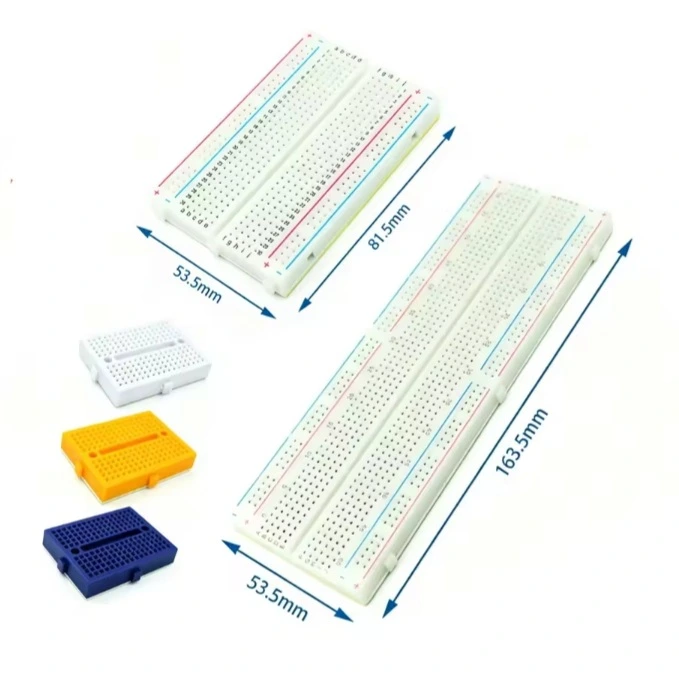
Solderless Breadboard
A solderless breadboard allows electronic circuits to be assembled without soldering, making it ideal for prototyping, testing and learning electronics.
Specifications
| Type | Solderless Breadboard |
|---|---|
| Tie Points | 830 (typical) |
| Terminal Strips | 630 Points |
| Power Rails | 200 Points |
| Compatible Wire | 20–29 AWG |
| Material | ABS Plastic |
| Contacts | Nickel-plated Phosphor Bronze |
| Reusable | true |
| Mounting | Self-adhesive backing |
Some links on this page are affiliate links. If you purchase through them, Embedded Nerd may earn a small commission at no additional cost to you. This helps support the website and allows us to continue creating free tutorials and guides. Thank you for your support!
Resources
You May Also Like

Overview
A solderless breadboard is one of the most essential tools for anyone learning or developing electronic circuits. It allows components to be connected without soldering, making it perfect for rapid prototyping, experimentation and debugging.
Breadboards are commonly used with development boards such as the ESP32 DevKit, Arduino and Raspberry Pi, enabling quick hardware assembly before designing a permanent PCB.
Features
- No soldering required
- Reusable design
- Standard 2.54 mm spacing
- 830 tie points (typical)
- Dual power rails
- Compatible with jumper wires
- Ideal for prototyping
- Suitable for beginners and professionals
How a Breadboard Works
Internally, a breadboard contains metal strips that electrically connect groups of holes together.
The central terminal strips are used for components such as:
- Integrated Circuits (ICs)
- Sensors
- LEDs
- Resistors
- Capacitors
The outer rails are normally used to distribute power:
- VCC
- GND
This layout makes it easy to build and modify circuits in seconds.
Applications
Breadboards are widely used for:
- Arduino projects
- ESP32 development
- Raspberry Pi electronics
- Sensor testing
- IoT prototypes
- Robotics
- Educational laboratories
- Circuit debugging
- Embedded system development
Compatible Components
A solderless breadboard works with a wide variety of components, including:
- LEDs
- Push buttons
- Resistors
- Capacitors
- Transistors
- Integrated Circuits
- Sensors
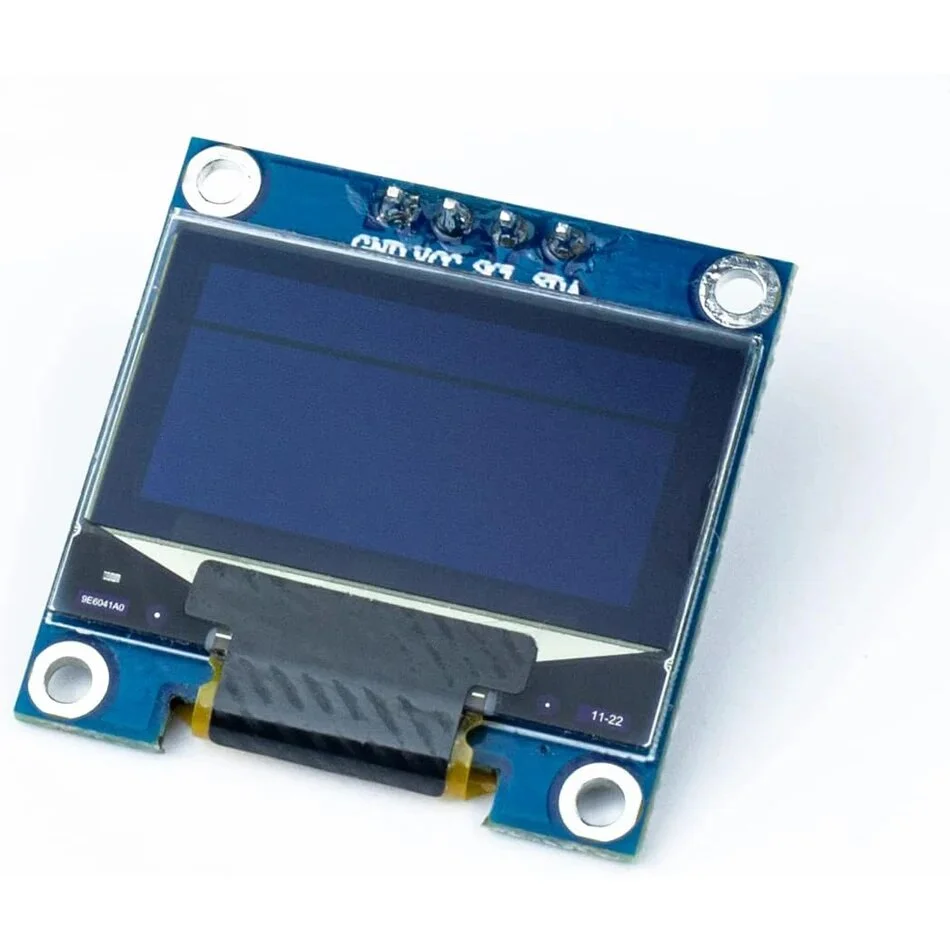
- OLED Displays
- Relay Modules
Best Practices
To obtain reliable circuits:
- Keep jumper wires short.
- Use different wire colours for power and signals.
- Double-check power rail polarity.
- Avoid loose connections.
- Organise wiring to simplify debugging.
Project Ideas
A breadboard is ideal for building:
- LED blink circuits
- Temperature monitors
- OLED display projects
- Motion detection systems
- Home automation prototypes
- Weather stations
- IoT sensor nodes
- Robotics experiments
Compatibility
The solderless breadboard is compatible with virtually every low-voltage electronics platform, including:
- Arduino Uno
- Arduino Nano
- ESP32 DevKit
- ESP8266
- Raspberry Pi
- STM32
- RP2040
- Teensy
Frequently Asked Questions
What is a breadboard?
A breadboard is a reusable prototyping board that allows electronic circuits to be assembled without soldering.
Can I use a breadboard with ESP32?
Yes. ESP32 development boards are fully compatible with standard 2.54 mm breadboards.
Can breadboards carry high current?
Breadboards are designed for low-power electronics and are not suitable for high-current applications.
Why are the power rails separated?
Many large breadboards split the power rails in the middle, requiring a jumper wire if continuous power is needed.
Final Thoughts
A solderless breadboard is one of the first tools every electronics enthusiast should own. Its reusable design, flexibility and ease of use make it indispensable for learning electronics, testing ideas and developing embedded systems before committing to a permanent PCB.
Whether you’re experimenting with an ESP32, building Arduino projects or testing sensors, a breadboard remains the fastest and most convenient way to prototype electronic circuits.