Sensors for Arduino, ESP32 & Raspberry Pi
Products
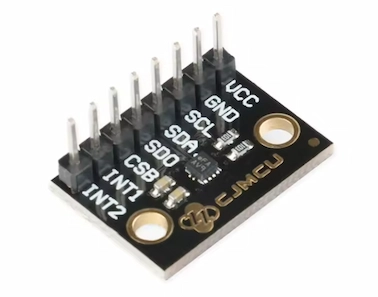
BMA400 Accelerometer Module
BMA400 3-axis ultra-low-power accelerometer module with I2C and SPI communication, motion detection, orientation sensing and step counting.
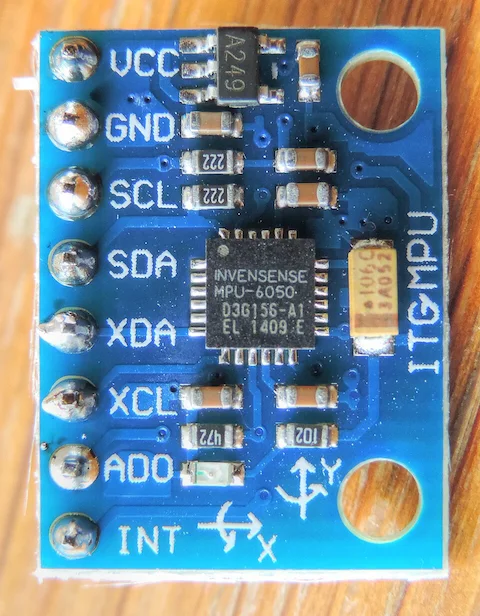
MPU6050 Accelerometer & Gyroscope
MPU6050 6-axis motion sensor combining a 3-axis accelerometer and 3-axis gyroscope with I2C communication.
Types of Sensors
Sensors allow electronic systems to detect and measure physical conditions such as temperature, light, motion, distance and environmental changes.
Common sensor types include:
- Temperature sensors
- Humidity sensors
- Motion sensors
- Distance sensors
- Light sensors
- Pressure sensors
- Gas sensors
- Sound sensors
- Environmental sensors
Temperature & Humidity Sensors
Temperature and humidity sensors are commonly used in weather stations, environmental monitoring and home automation projects.
Popular examples include:
- DHT11
- DHT22
- BME280
- BMP280
- DS18B20
Motion & Presence Sensors
Motion sensors can detect movement or the presence of objects and people, making them useful for automation, security and interactive projects.
Common examples include:
- PIR motion sensors
- Microwave motion sensors
- Accelerometers
- Gyroscopes
- IMU sensors
Distance Sensors
Distance sensors measure the distance between the sensor and an object.
Common technologies include:
- Ultrasonic sensors
- Infrared distance sensors
- Time-of-Flight sensors
- LiDAR sensors
These sensors are useful for robotics, obstacle detection, automation and measurement projects.
Light Sensors
Light sensors detect the intensity or presence of light and can be used in automatic lighting, environmental monitoring and interactive electronics projects.
Common examples include:
- LDR photoresistors
- Photodiodes
- Phototransistors
- Ambient light sensors
Environmental Sensors
Environmental sensors combine measurements such as temperature, humidity, pressure and air quality.
They are commonly used in:
- Weather stations
- IoT projects
- Indoor air monitoring
- Smart home systems
- Environmental monitoring
Compatible Development Boards
These sensors can be used with a wide range of development boards, including:
- Arduino
- ESP32
- Raspberry Pi
- Raspberry Pi Pico
- ESP8266
Always check the sensor’s voltage, communication interface and library support before connecting it to a development board.
Choosing a Sensor
The right sensor depends on what you need to measure and how the sensor will communicate with your development board.
When selecting a sensor, consider:
- Measurement range
- Accuracy
- Operating voltage
- Communication interface
- Response time
- Library and software support
- Compatibility with your development board
Common interfaces include GPIO, analog output, I2C, SPI and UART.
Frequently Asked Questions
What sensors can be used with Arduino?
Arduino can be used with many types of sensors, including temperature, humidity, light, motion, distance, pressure and environmental sensors.
Can sensors be used with ESP32?
Yes. ESP32 supports a wide range of sensors and provides interfaces such as GPIO, I2C, SPI and UART. Its built-in Wi-Fi and Bluetooth also make it particularly useful for IoT sensor projects.
Can sensors be used with Raspberry Pi?
Yes. Raspberry Pi boards can connect to many digital sensors using interfaces such as I2C, SPI and GPIO. Some analog sensors may require an external ADC because most Raspberry Pi boards do not have built-in analog inputs.
What is the difference between a sensor and a module?
A sensor is the component that detects or measures a physical quantity. A sensor module usually combines the sensor with additional electronics, such as signal conditioning, an amplifier or a communication interface, making it easier to connect to a development board.
Do sensors work with all development boards?
Not necessarily. Compatibility depends on factors such as operating voltage, communication interface, signal type and available software libraries. Always check the sensor specifications before connecting it to a development board.