Electronic Modules for Arduino, ESP32 & Raspberry Pi
Products
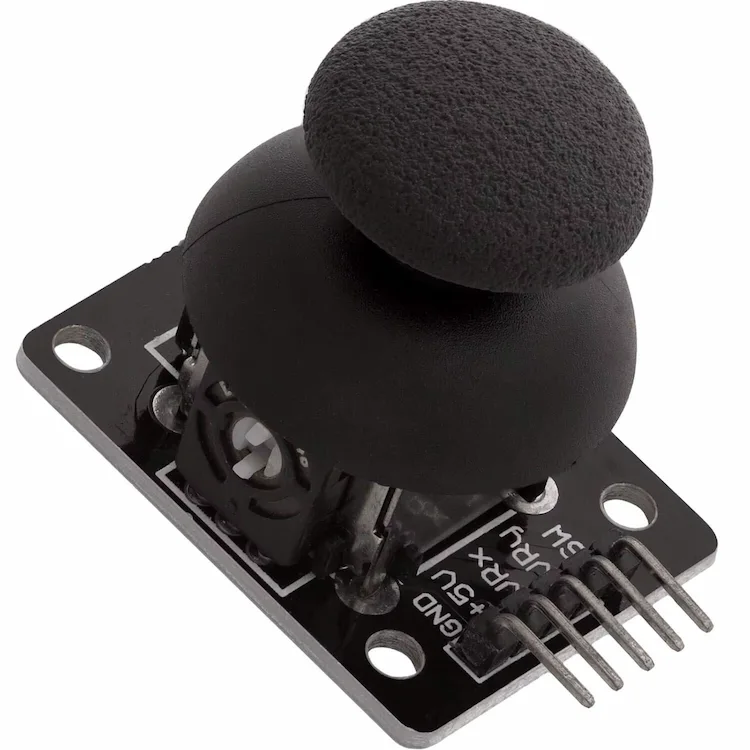
KY-023 Analog Joystick Module
KY-023 Analog Joystick Module featuring dual-axis analog control and an integrated push button for Arduino, ESP32 and Raspberry Pi projects.
Types of Electronic Modules
Electronic modules combine one or more components or circuits into a ready-to-use board, making it easier to add specific functions to an electronics project.
Common module types include:
- Relay modules
- Motor driver modules
- Communication modules
- RTC modules
- Power modules
- Interface modules
- Audio modules
- LED modules
- Expansion modules
Relay Modules
Relay modules allow development boards to control higher-voltage or higher-current devices using a low-voltage control signal.
They are commonly used in:
- Home automation
- Lighting control
- Robotics
- Industrial projects
- IoT systems
When using relay modules, always check the voltage and current ratings and follow appropriate electrical safety practices.
Motor Driver Modules
Motor driver modules provide the electronics required to control motors from a development board.
Common applications include:
- Robotics
- DC motor control
- Stepper motor control
- Automated mechanisms
- Small vehicles
Popular motor driver technologies include H-bridge and dedicated stepper motor driver circuits.
Communication Modules
Communication modules add wired or wireless connectivity to development boards and embedded systems.
Common examples include:
- Bluetooth modules
- Wi-Fi modules
- RF modules
- LoRa modules
- GSM modules
- CAN modules
- RS-485 modules
These modules can be useful for IoT, remote monitoring and communication between electronic devices.
RTC Modules
Real-time clock modules allow a project to keep track of time and date, even when the main system is restarted or powered off.
RTC modules are commonly used in:
- Data loggers
- Clocks
- Automation systems
- Scheduling projects
- Embedded monitoring systems
Power Modules
Power modules provide useful power-management functions for electronics projects.
Examples include:
- DC-DC converter modules
- Voltage regulator modules
- Battery charging modules
- Power supply modules
- USB power modules
Always verify input voltage, output voltage and maximum current before connecting a power module to your project.
Interface & Expansion Modules
Interface and expansion modules make it easier to connect additional hardware to a development board.
Examples include:
- GPIO expansion modules
- I/O expanders
- Level shifters
- ADC modules
- DAC modules
- Interface adapters
These modules can be particularly useful when a development board does not provide the required number of inputs, outputs or interfaces.
Compatible Development Boards
Electronic modules can be used with many development platforms, including:
- Arduino
- ESP32
- Raspberry Pi
- Raspberry Pi Pico
- ESP8266
Compatibility depends on factors such as operating voltage, communication protocol, available GPIO pins and software support.
Choosing an Electronic Module
When choosing a module, consider:
- Required function
- Operating voltage
- Input and output voltage
- Current requirements
- Communication interface
- Pin configuration
- Physical dimensions
- Library and software support
- Compatibility with your development board
Always check the module specifications before connecting it to your project.
Frequently Asked Questions
What is an electronic module?
An electronic module is a small circuit board that combines components and circuitry to provide a specific function, making it easier to integrate that function into an electronics project.
What is the difference between a module and a sensor?
A sensor is designed primarily to detect or measure a physical quantity. A module can provide many different functions and may contain a sensor together with additional electronics.
Can modules be used with Arduino?
Yes. Many electronic modules are specifically designed to work with Arduino and can be connected using GPIO, I2C, SPI, UART or other interfaces.
Can modules be used with ESP32?
Yes. ESP32 supports a wide range of modules, including communication, relay, motor driver, power and interface modules.
Can Raspberry Pi use electronic modules?
Yes. Raspberry Pi boards can connect to many modules through GPIO, I2C, SPI, UART and other interfaces. However, voltage compatibility should always be checked before connecting a module.
Are all modules plug-and-play?
No. Some modules require additional components, configuration or software libraries. Always check the module documentation and electrical specifications before using it.